
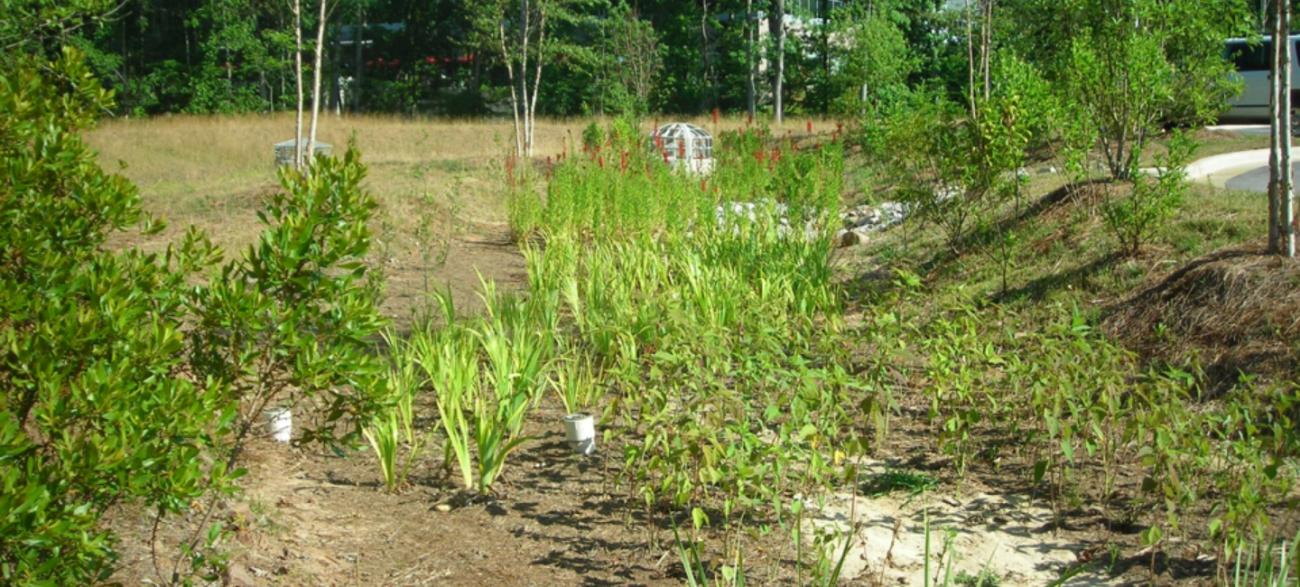
In some parts of Wake County, homeowners can install a stormwater device to go over the normal impervious surface limit on their lot, up to an impervious area maximum of 30% of the lot.
This applies to:
- The rural, non-critical zoning area of the Swift Creek Land Management Plan, which has a normal impervious limit of 12% without onsite stormwater;
- Older subdivisions (built before 2006) that don't have a subdivision-wide stormwater plan and don't have a recorded "perpetuity statement," a rule stating impervious limits on each lot will be strictly enforced forever, or
- Properties that want to replace traditional pavement areas with permeable pavement.
How do I begin the permitting process?
The stormwater deviation permitting process begins with the building permit. Make sure that your building permit application has a site plan and a table that lists all existing and proposed impervious features. Site plan requirements can be found here (Spanish version).
If your property is eligible for a stormwater deviation permit, Watershed Management staff will request a Stormwater Certification review, as a step in the building permit review. The Stormwater Certification review costs $50. After payment, staff will calculate the size of stormwater device needed to offset the proposed improvements which go over the normal impervious surface limit. Staff will discuss options for revising your building plan or pursuing a stormwater deviation.
What items do I need for submittal?
| Required Document | Description |
|---|---|
| Single Family Residential Stormwater Deviation Submittal Checklist |
|
| Stormwater Deviation Application |
|
| Stormwater Management Plan – Stormwater Device Plan |
|
| Stormwater Management Plan – Site Plan |
|
Please submit these documents for a Stormwater Deviation permit through the Wake County permit portal. Instructions for setting up a permit portal account are available here.
Note:
- A $400 review fee must be paid to initiate processing. This review fee also covers the permit issuance fee.
- The stormwater planning process can occur in parallel with the on-site wastewater design; however, the stormwater devices may not be placed in well, septic or repair areas. The on-site approval shall preclude the stormwater plan approval.
Stormwater control measure options for residential lots
Small deviations can often be handled by the applicant or homeowner. Larger stormwater management devices should be designed by a qualified professional. Options include:
- Rain Gardens
- Cisterns (above-ground or underground tanks)
- Rain barrels
- Infiltration devices
- Dry detention basins
- Permeable pavement – requires an engineered design
Engineering design isn't required for most systems. Permeable pavement is the exception; it must comply with the state manual. For technical details, see section 4.3.2 of the Wake County Stormwater Design Manual.
How do I complete my permit after I have built the stormwater device?
After the building and stormwater improvements are constructed in accordance with the approved plan, the homeowner must obtain an as-built survey from a licensed land surveyor and submit two agreements related to the stormwater device.
| Requirement | Description |
|---|---|
| Submit the final as-built survey to the stormwater deviation permit | Must include:
|
| Approval of the as-built survey from Watershed Management |
|
| Stormwater Agreement |
|
| Operation and Maintenance Agreement |
|
How do I submit the Annual Owner Stormwater Inspection report?
If your property has a stormwater feature, you must complete and submit the Homeowners Annual Inspection Checklist each year after construction is complete, for as long as the stormwater feature remains in place. Learn more about the inspection requirements.
Questions?
Please contact Watershed Management at 919-856-7436.
For additional guidance please review section 4.3.2 of the Stormwater Design Manual or set up a presubmittal consultation meeting at wake.gov/WMhelp