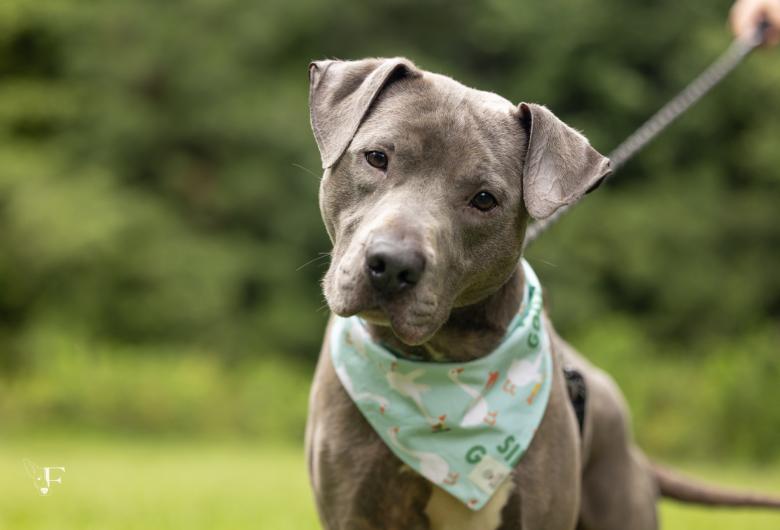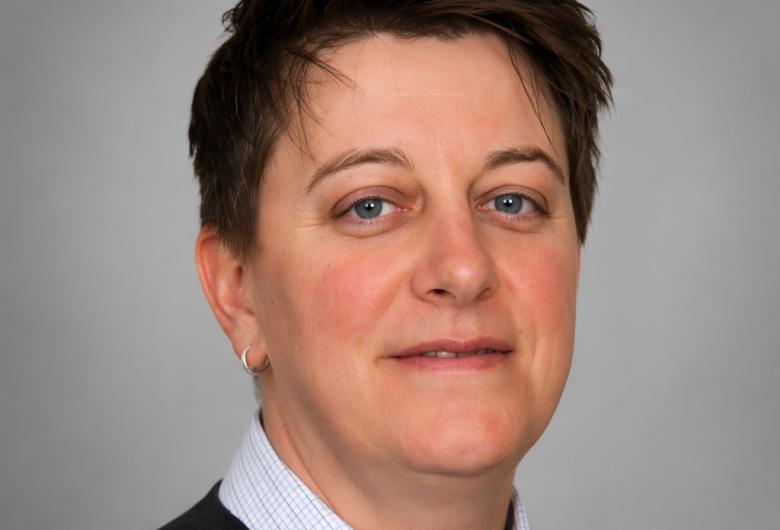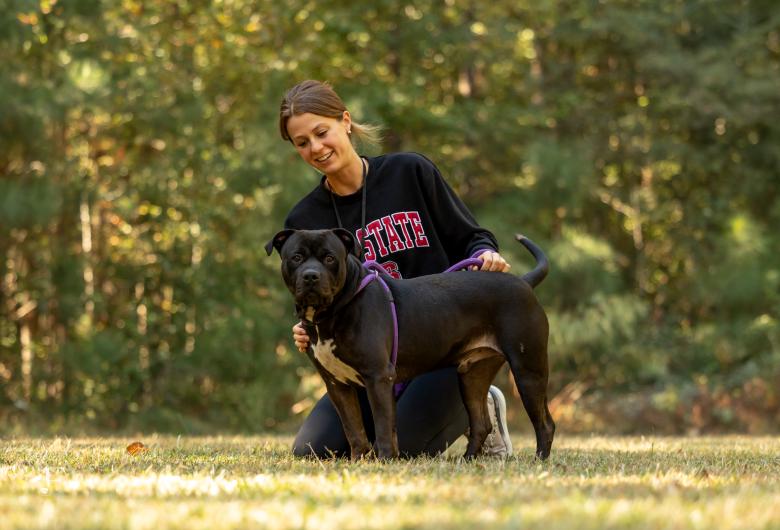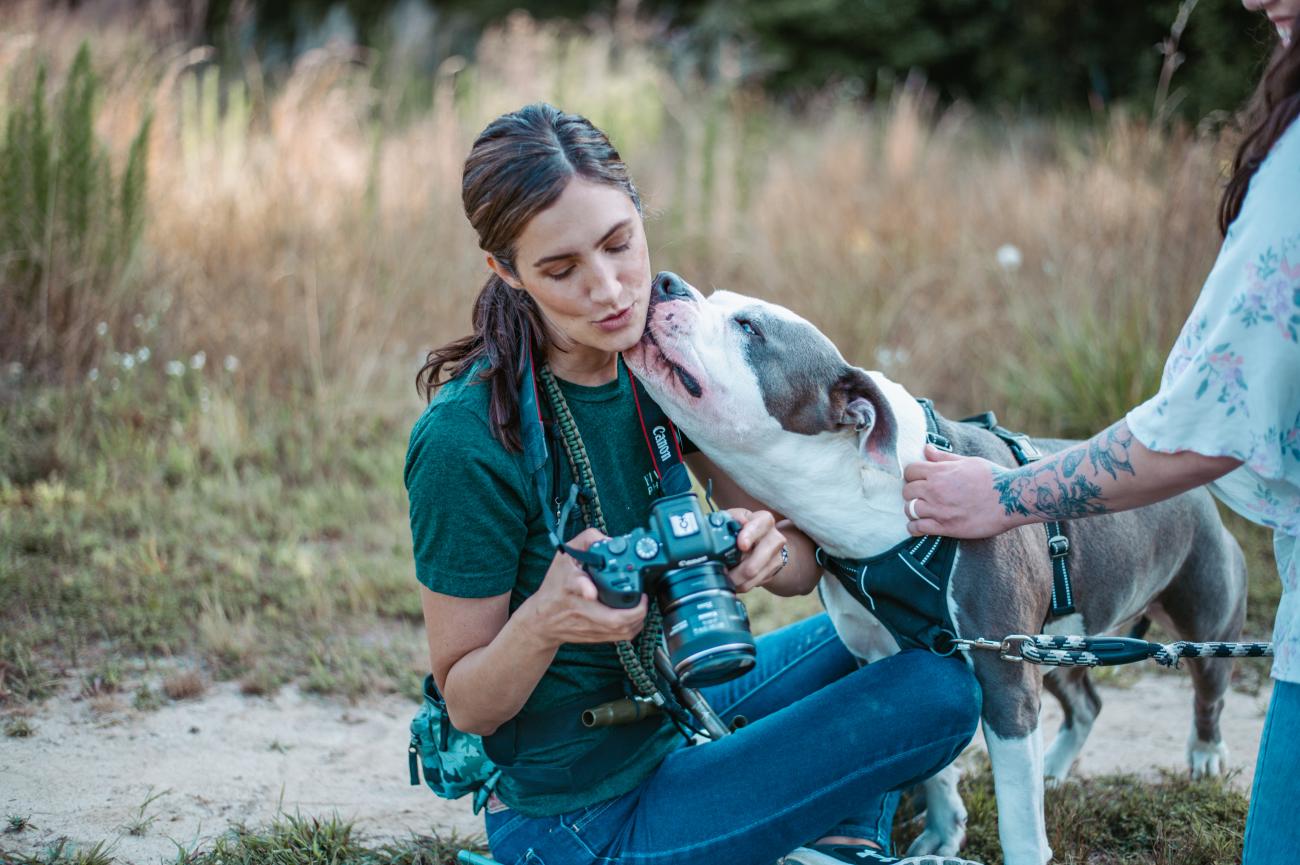
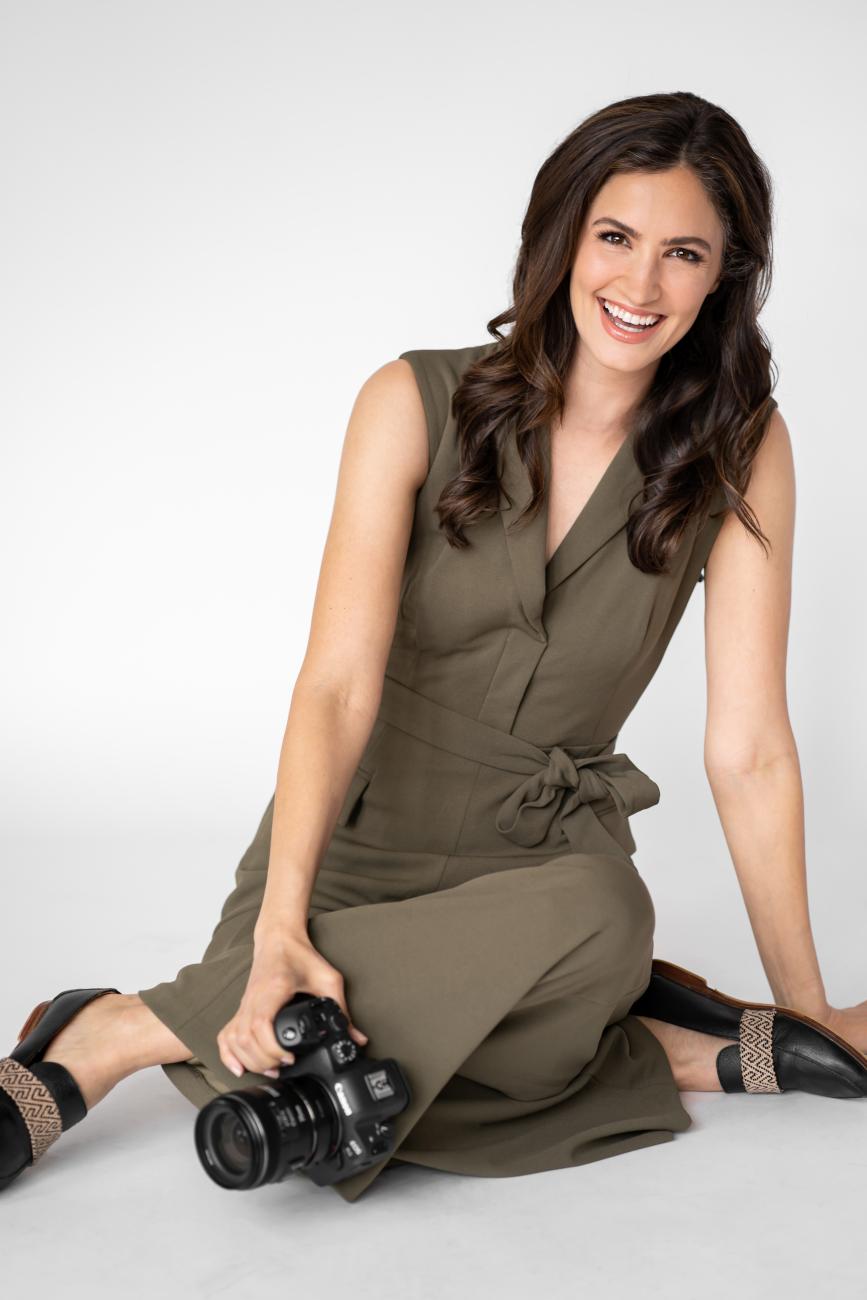
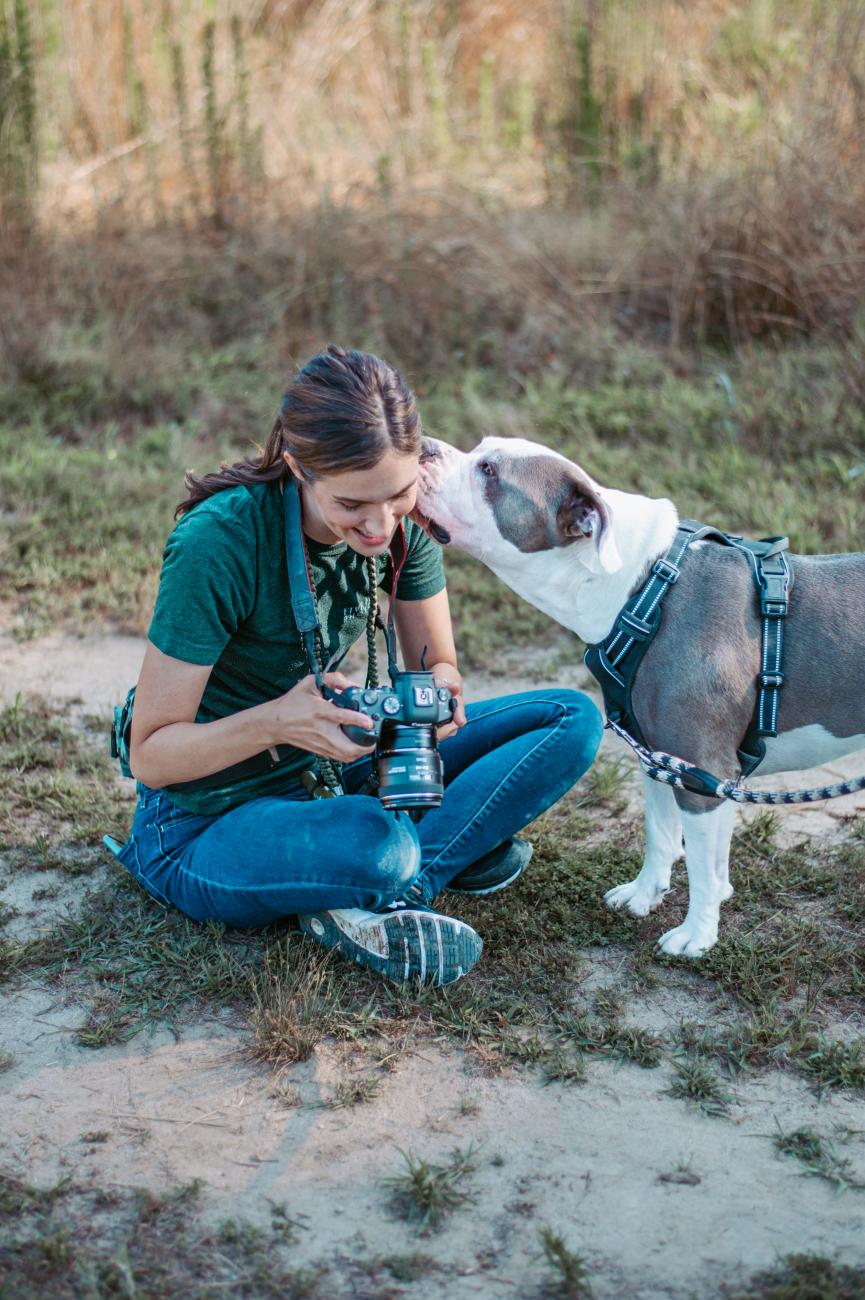
Despite the crisp fall mornings, falling leaves, and shorter days, Joanne Wetzel never misses a day at the Animal Center, taking photos of our pets and making sure they’re represented in the best possible light. A dedicated long-time volunteer, Joanne is an essential part of our team. If you visit the Center, you’ll often spot her with a heavy backpack loaded with cameras and treats, patiently working with each pet, sometimes for hours, to get the perfect shot that showcases their unique character and personality. After all that hard work, she hopes her photos will touch hearts and inspire people to open their homes to another furry friend. While Joanne runs Five Freedoms Photography, she devotes the majority of her time to rescue photography. Below is an interview with Joanne, sharing how she got started, the first dog she photographed, and why volunteering is so meaningful to her.
How did you get into dog photography?
I got my start in dog photography volunteering at Wake County Animal Center, actually. I started volunteering in December of 2017 after finding out that the shelter was looking for people to help walk and cuddle adoptable dogs.
That first week I started volunteering, I fell in love. I quickly got involved in everything I could do to help the animals—from fundraising to outreach to social media—you name it.
Having a background in entertainment, I realized very quickly that part of what these animals were missing were photos that helped make them stand out. As a talent, great photos get you booked. So, I wanted to apply the same methodology to our adoption board and see if that could impact adoptions.
So, I bought a very beginner camera, took a semester on photography, and that was all she wrote.
What inspired you to focus on animals, especially dogs?
While I can photograph creatures of all kinds, I primarily focus on dogs, because it was and still is my first love when it comes to photography. Due to animal overpopulation in our state, breed restriction legislation, negative stigmas about certain breeds, and the exponential rise of poorly bred boutique “designer” dogs, rescue dogs need our help more than ever to find homes.
I’m also trained in dog behavior. I have spent thousands of hours over the past seven years studying dog body language and behavior in order to excel at my craft and help dogs feel great in front of the camera.
Do you remember the first dog you ever photographed?
The first shelter dog that I ever photographed at Wake County Animal Center was a black pittie named Brandi. She was bounding around in the play yard with one of those silicone toy bones in her mouth, simply having the best time.
While looking back, the images are nothing special, it was at that moment I realized this—dog photography—could be something and make an impact. Blending the personality and beauty of our canine friends with stunning light, photography, and editing to showcase them being their best selves.
What’s your background—did you study photography formally or are you self-taught?
As a photographer, I am entirely self-taught; however, even though I did not go through formal means to learn photography, I have spent several years now studying my craft through online education, practice, in-person conferences, photography retreats, and studying under world-renowned pet photographers. I strive as often as possible to learn something new as it relates to photography to always keep leveling up my work for both shelter animals and my private clients.
How do you get dogs to relax and show their personality on camera?
It truly depends on the dog! Some dogs come to me guns blazin’, oozing with personality, while others need a few moments and a calm energy. Yummy treats are always a good thing to have to encourage them to open up—or even a fun toy. But usually, it’s all about reading a dog’s body language, understanding how they are feeling, and taking things from there.
Do you have any go-to tricks or tools to get a dog’s attention during a shoot?
Noisemakers work well—especially novel noises that dogs don’t get to hear often. High-value treats are always a good option too (think cheese or freeze-dried liver). But occasionally, neither of those work, so in those instances, I’ll rely on movement, snuggles with a fellow volunteer, or simply allow them to just exist while I follow what they do and snap accordingly.
Have you ever had a photo session that completely surprised you?
Dogs always surprise me! I usually have a plan or outline when it comes to sessions, but the dog always dictates how things are really going to go, so I have to be flexible.
The images I love the most are the surprising ones—the moments where a dog opens up and is totally and completely themselves. That could be rolling around on their back in the grass, chewing on a tennis ball, tippy-tapping for a treat, snuggling in a volunteer's lap, or showcasing all of their silliest expressions. Working with dogs means there is never a dull moment.
Why do you think dog photography matters?
I think dogs bring so much to our world and yet, we ask so much of them. We expect them to conform, to be perfect, to not have feelings, and to exist without “misbehaving” in our crazy, chaotic world. I think dog photography matters because it shows our dogs as they are—not what we expect them to be—and how truly delightful they are.
How do you hope your work helps dogs and their people?
My main goal has always been to help as many dogs as possible. I hope that through photography, marketing, fundraising, and advocacy, I continue to impact the animal overpopulation crisis in our state. In terms of impacting people, I hope that I inspire individuals to get involved through volunteering, fostering, or adopting. Even one hour a month volunteering, being a temporary foster, or a $5 donation can make a difference in the lives of these animals.
What’s the most rewarding part of what you do?
The most rewarding thing is seeing that dog open up for the very first time on camera and replacing their stressed, sad, or anxious intake photo with a photo that truly allows them to shine.
Secondly, when someone says to me that an image I took is what inspired them to learn more about an animal or even adopt that animal, that means so very much. Oftentimes, pet parents get to keep those photos after adoption as a reminder of their time with us. I think that’s also really special and sweet—to know their animal was loved and cared for before they found them.
Do you have dogs of your own?
I do! I have a four-year-old American Pitbull Terrier from Wake County Animal Center named Tully. My other dog is Gumbo, a 95-pound Rottweiler mix from Perfectly Imperfect Pups. While these two give me a run for my money daily, they have taught me so much about body language and being a pet guardian with dogs who have big feelings about the world!
What advice would you give someone who wants to start photographing pets?
My single biggest advice? Go out and practice on other people’s pets or even shelter animals before making the decision to start a pet photography business. If you have the patience and understanding to photograph animals outside of your own, then you could definitely make this a career path!
What keeps you coming back to volunteer at Wake County Animal Center?
The animals. I hear people say so often that they could never volunteer or foster because it would be too hard—and yes, at times, it can be. But I don’t go for me, I go for them. They still need to know that they matter and that they are loved. I hope that with each photo session I do, I enrich that dog’s life just a little bit with some fun, a few yummy treats, a cuddle, and a lot of love. Besides, I get all of that back tenfold.